Cedar Mulch

Organic mulch in vegetable gardens Used as ground cover in flower beds, around trees, shrubs, and vegetable gardens, this mulch helps retain soil moisture, suppress weeds, and regulate soil temperature. It also enhances soil quality as it breaks down, supporting healthy plant growth.
Product ID 818
$28 - $377
Delivered Price per ton / yd


Your Total
$0.00
Stuck? We are here to help! Get a Quote for Aggregates

Information

  • Pricing Cedar Mulch
  • Density 1 ton = 2.5 cu yd / 1 cu yd = 0.4 ton
  • Coverage 0.62 cu yd covers 100 sq ft 2 inch deep
  • Coverage 1.54 cu yd covers 100 sq ft 5 inch deep
  • Volume Estimator Calculate Cedar Mulch

Cedar Mulch: Characteristics, Uses, and Practical Details

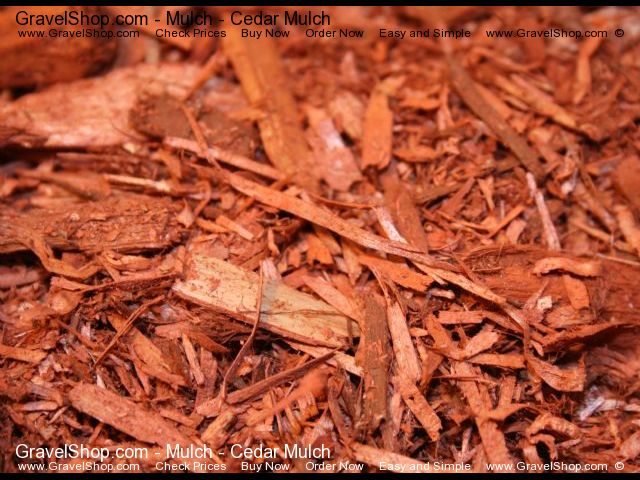
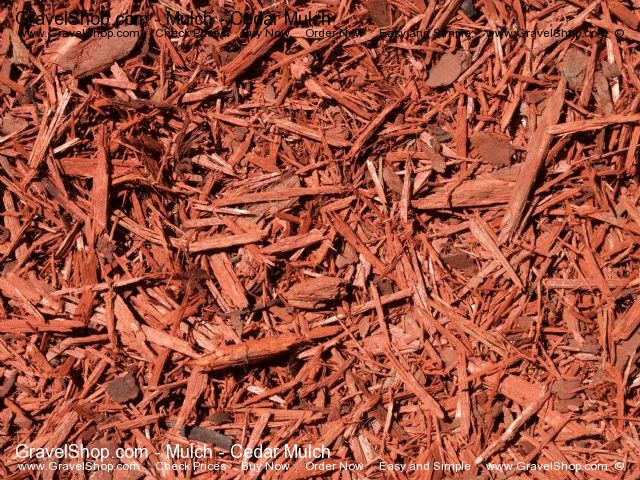
Cedar mulch, also known as cedar wood mulch, cedar bark mulch, or aromatic cedar mulch, is made from shredded or chipped cedar wood and bark. It is recognized for its distinctive aromatic scent, which comes from natural oils called thujaplicins. These natural oils make cedar mulch naturally insect-repellent, helping to deter some pests in garden and landscape settings. The mulch typically has a reddish-brown to tan color, which may fade to gray over time due to weather exposure.

Cedar mulch is slow to decompose compared to many other wood mulches, which means it lasts longer before needing replacement. It helps retain soil moisture, suppresses weeds, and provides effective ground cover for a range of landscaping applications. Cedar mulch is lightweight compared to stone or rubber mulches, making it easier to handle and spread. However, if applied too thickly, it can form a mat that restricts water and air flow to the soil.

Technical Specifications and Standards

Cedar mulch is typically sold in bags (commonly 2 or 3 cubic feet) or in bulk. The particle size can vary from fine to coarse, often ranging from 1/2 inch to 2 inches. Moisture content at the time of sale usually ranges from 30% to 60%. The product should be free from large sticks, trash, or other contaminants, according to supplier specifications. Cedar mulch may be labeled as "natural" or "dyed" (color-enhanced) and may meet local or state regulations for playground or landscape use if specified. The pH of cedar mulch is slightly acidic, typically between 5 and 6.5. Some cedar mulches are certified for playground use under ASTM F1292 standards.

Common Applications

  • Landscape mulch for garden beds, trees, and shrubs
  • Weed suppression in ornamental plantings
  • Moisture retention for soil
  • Erosion control on slopes
  • Pathways and walkways in gardens
  • Playground surfacing (if certified)
  • Decorative ground cover

Practical Characteristics and Limitations

Cedar mulch is not recommended for use around acid-sensitive plants, as it may lower soil pH over time. It is also not suitable for vegetable gardens where soil pH is critical, nor should it be used as a soil amendment or tilled into the soil. Cedar mulch is flammable and should not be used in fire-prone areas. If used as a top dressing for seeded lawns or beds, it may inhibit seed germination. Cedar mulch is not suitable for use in aquariums or as animal bedding, as the aromatic oils may be toxic to some animals.

  • Do not use as a soil amendment or till into soil
  • Not for use in aquariums or animal bedding
  • Should not be used in fire-prone areas
  • May inhibit seed germination if used as a top dressing for seeded areas

Comparison to Other Mulch Types

Cedar mulch decomposes slower than pine or hardwood mulches, resulting in less frequent replenishment. Its natural oils make it more insect-repellent than most other wood mulches. Cedar mulch is typically more expensive than basic hardwood or pine mulches. The color lasts longer than pine, though it will fade with time. It is lighter in weight than stone or rubber mulch, making it easier to transport and spread. Cedar mulch may acidify soil more than cypress or hardwood mulches and is less likely to compact than fine pine bark mulches. However, it is not as long-lasting as stone or synthetic mulches.

Material Handling and Installation

Before applying cedar mulch, clear the area of weeds and debris, and lightly loosen the soil surface. When spreading mulch, avoid placing it directly against plant stems or tree trunks to reduce the risk of rot. For finer types of cedar mulch, a 2-inch layer is usually sufficient to prevent soil compaction and preserve aeration. For coarser mulch, a layer up to 4 inches thick can be used to minimize weed growth and aid moisture retention. Regularly fluffing the mulch layer helps maintain aeration and drainage.

Cedar Mulch Typical Specifications

Characteristic Details
Material Shredded or chipped cedar wood and/or bark
Color Reddish-brown to tan, may fade to gray
Particle Size 1/2" to 2" pieces, fine to coarse
Moisture Content 30-60% at sale
pH 5.0 - 6.5 (slightly acidic)
Packaging Bags (2 or 3 cu ft) or bulk
Certification May be ASTM F1292 certified for playground use
Insect Repellent Yes, due to natural oils

Pricing and Delivery Examples

Cedar mulch pricing and delivery costs vary by location. The price per ton and delivery fee depend on the city and county. All prices include delivery to the specified ZIP code. Delivery is performed by local haulers and is subject to road access and site conditions. Orders can be placed online at Gravelshop, with instant pricing shown for your ZIP code. Below are sample prices for selected cities across the United States.

City ZIP Code County Price per Ton (USD) Delivery Price (USD)
Independence 64050 Jackson County 60 135
Brookfield 53005 Waukesha County 68 131
Fort Worth 76102 Tarrant County 67 167
Fulshear 77441 Fort Bend County 51 153
Virginia Beach 23453 Virginia Beach City 71 145
Carmel 46032 Hamilton County 73 135
Santa Maria 93455 Santa Barbara County 81 135
Greenbrier 37073 Robertson County 54 145

Ordering and Delivery with Gravelshop

Gravelshop supplies cedar mulch and other landscaping materials in 31 U.S. states. Orders can be placed online in less than a minute. All prices displayed include delivery and sales tax, with no hidden fees. You can select your preferred delivery date and time during checkout. Delivery is performed by independent trucking companies, and the material will be unloaded at the most suitable spot based on site conditions. For accurate pricing, enter your ZIP code on the website to view local rates. If you need a quote for a large order or have specific delivery requirements, contact Gravelshop by phone or email.

Gravelshop provides clear material guides and a simple coverage calculator on the website to help you determine how much cedar mulch you need for your project. Payment can be made online using major credit cards or digital payment methods. If you are not present at the time of delivery, the material will be left unattended at the designated location, and you are responsible for it from that point.

Cedar Mulch: Comparison Summary

Feature Cedar Mulch Pine Mulch Stone Mulch
Decomposition Rate Slow Faster Does not decompose
Insect Repellent Yes No No
Color Longevity Moderate Short Long
Weight Light Light Heavy
Soil Acidification Moderate High None
Cost Higher Lower Higher

Summary

Cedar mulch is a durable, insect-repelling, and visually appealing ground cover for landscaping, garden beds, and playgrounds. Its slow decomposition rate and natural oils make it effective for weed suppression and moisture retention. Cedar mulch should not be used around acid-sensitive plants, as a soil amendment, or in fire-prone areas. It is available in various bag sizes or in bulk, with pricing and delivery tailored to your location. Gravelshop provides a straightforward online ordering process, clear pricing, and reliable delivery across much of the United States.


Similar Products

Related Topics

Wide Variety of Mulches for Every Garden

Keep your garden healthy and beautiful with premium mulch designed to retain moisture, suppress weeds, and enrich soil. Choose from black, red, b...

Explore Category

Pine Barks, Wood Chips & Dyed Mulch Products

This category offers a wide range of mulch, bark, and bedding materials. Options include different colors and chip sizes to suit garden beds, pla...

Explore Category

Mulch & Bark

Learn how mulch, bark, pea gravel, and rock-mulch alternatives support moisture control, weed suppression, soil protection, and modern landscape ...

View Mulch Guide


Frequently Asked Questions

Cedar mulch is used as ground cover in flower beds, around trees, shrubs, and vegetable gardens. It helps retain soil moisture, suppress weeds, and regulate soil temperature. It also enhances soil quality as it breaks down.

Cedar mulch decomposes slowly compared to many other wood mulches. This slow breakdown means it lasts longer before needing replacement, making it a durable option for landscaping and garden beds.

Cedar mulch naturally repels insects due to aromatic oils called thujaplicins found in the wood. These oils help deter some pests in garden and landscape settings without needing added chemicals.

Cedar mulch is generally not recommended for vegetable gardens where soil pH control is critical. It may lower soil pH over time and is better suited for ornamental plantings rather than as a soil amendment.

For finer cedar mulch, a 2-inch layer is sufficient to prevent soil compaction and maintain aeration. Coarser cedar mulch can be applied up to 4 inches thick to help with weed suppression and moisture retention.

Some cedar mulch is certified for playground use under ASTM F1292 standards. Certified cedar mulch can provide a safe and decorative ground cover for playground surfacing.

Cedar mulch has a slightly acidic pH, typically between 5 and 6.5. Over time, it may acidify the soil moderately, so it should not be used around acid-sensitive plants.

We offer online ordering with instant pricing based on your ZIP code. Delivery is arranged by local haulers, and you can select your preferred delivery date and time during checkout. All prices include delivery and sales tax.


More Questions? Tap the chat icon in the bottom-right to ask our AI assistant.

(844) 331-9393
Our support team is ready to help

Select Quantity