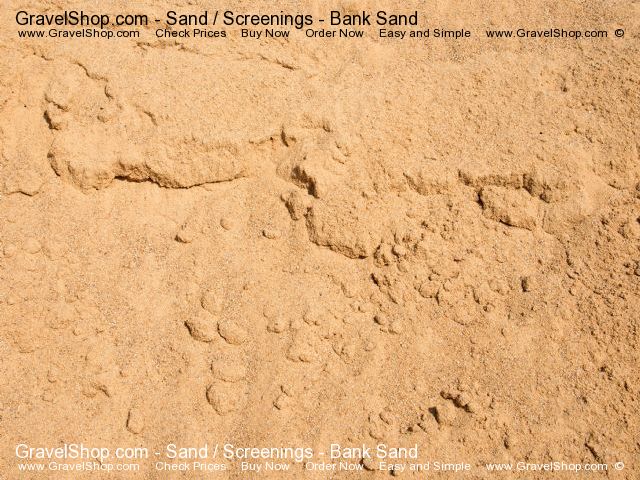
Bank Sand
Information
- Pricelist: Prices Bank Sand
- Density: 1 ton = 0.83 cu yd / 1 cu yd = 1.2 ton
- Coverage: 0.62 cu yd covers 100 sq ft 2 inch deep
- Coverage: 1.54 cu yd covers 100 sq ft 5 inch deep
- Volume Estimator: Coverage Calculate Bank Sand
Discover the Multifunctional Advantages of Bank Sand for Industry and Lawncare
Bank Sand, also referred to as natural bank sand, is a finely textured sand primarily utilized in industrial settings, lawncare projects, and recreational areas. Its composition allows it to support healthy grass growth, making it a preferred choice for landscaping and turf installation. Unlike coarse construction sand, bank sand has a finer grain size that enhances its suitability for applications requiring smooth leveling and soil amendment.
Performance Characteristics and Physical Properties of Bank Sand
Bank Sand exhibits excellent drainage properties while maintaining adequate moisture retention essential for plant health. Its fine particles enable superior compaction and stability when used as a base fill, preventing uneven settling or erosion. The material's consistency ensures uniform support for turf layers and contributes to the long-term durability of landscaped surfaces.
Key physical characteristics include:
- Fine grain size conducive to root penetration and grass establishment
- Good drainage capabilities to reduce water pooling and soil compaction
- Stable texture that resists displacement under foot traffic and weather conditions
However, bank sand is not suitable for heavy structural applications such as large-scale foundation work, where coarser aggregates are required for strength and load distribution.
How to Apply Bank Sand for Lawncare and Recreational Use
Preparing the Site for Optimal Results
Proper preparation of the installation site is critical when using bank sand. Areas with dips, holes, or uneven terrain should first be cleared of debris and compacted lightly. Applying a layer of bank sand helps level the surface and provides an ideal medium for seeding or laying sod.
Techniques for Filling and Leveling
Bank sand can be spread evenly across low spots or depressions in lawns to restore a smooth, uniform surface. For best results, moisture should be maintained during and after application to encourage settling and root growth. When used as a base beneath new grass installations, a minimum 2-3 inch layer is recommended to promote healthy turf establishment.
Maintenance Considerations
After installation, regular watering helps the bank sand settle and integrate with existing soil. Periodic aeration and top dressing with additional bank sand can prolong the lawn's evenness and overall health, especially in high-traffic recreational areas.
Common Residential and Commercial Projects Featuring Bank Sand
Bank sand is frequently employed in various practical projects including:
- Lawn repair and enhancement in residential yards
- Creating level surfaces for sports fields, playgrounds, and parks
- Industrial landscaping for aesthetic and functional ground cover
- Golf course bunker preparation and maintenance
Its versatility and compatibility with grass make it a go-to choice for both small-scale home improvement and larger commercial landscaping projects.
Why Choose Gravelshop as Your Bank Sand Supplier
Gravelshop offers a reliable supply of high-quality bank sand tailored to industrial, lawncare, and recreational customers. Our extensive experience ensures consistent material quality and efficient delivery, minimizing project delays. We prioritize transparency in product sourcing and specifications, enabling you to select the appropriate sand grade confidently. With comprehensive logistics support, Gravelshop serves as a dependable partner for all your landscaping and industrial sand needs.
Common Uses for Bank Sand
- Mixing component for mortar and concrete.
- Material for crafting sandboxes.
- Grading material for leveling surfaces.
- Top dressing for lawns and sports fields.
- Sand filter material for drainage systems.
- Infilling for artificial turf installations.
- Leveling material for drainage ditches.
- Landscape grading to improve drainage.
Similar products
Frequently asked questions
Bank sand is used for grading and leveling surfaces, improving drainage in lawns, sports fields, and ditches. It is also ideal for infilling under artificial turf, creating sandboxes, mixing with mortar or concrete, and filtering in drainage systems.
Bank sand supports healthy grass growth by providing a fine texture that enhances soil leveling and drainage. It helps maintain moisture retention and prevents soil compaction, making it suitable for landscaping and turf installation.
Bank sand is not suitable for heavy structural applications like large-scale foundation work. Coarser aggregates are necessary for strength and load distribution in such projects.
Areas should be cleared and lightly compacted before applying bank sand. It can be spread evenly over low spots with a recommended 2-3 inch layer to promote healthy turf growth and improve surface leveling.
Yes, bank sand exhibits excellent drainage properties while retaining adequate moisture. It reduces water pooling and soil compaction, supporting healthy plant and turf growth.
Bank sand is ideal for creating level surfaces on sports fields and recreational areas. Its stability and drainage help maintain durable and even playing surfaces.
Regular watering helps bank sand settle and integrate with existing soil. Periodic aeration and top dressing with additional bank sand prolong lawn evenness and health, especially in high-traffic areas.
More Questions? Tap the chat icon in the bottom-right to ask our AI assistant.
(844) 331-9393
Our support team is ready to help
© Copyright 2026. Powered by Sand Group USA inc.
Type your ZIP Code
Type the zip code of the delivery address to see available products and prices.